
A recirculating aquaculture system stands or falls on water quality. The fish never leave the same treated volume of water for long, so whatever accumulates — ammonia, nitrite, carbon dioxide, uneaten feed — will return to them unless it is removed or transformed. Daily practice is therefore less about a single perfect reading than about a habit of watching, recording, and acting before a drift becomes a crisis.
This article walks through the main parameters that a workshop crew watches in a recirculating loop: ammonia, nitrite, dissolved oxygen, and temperature, together with the related readings of pH, alkalinity, and nitrate. It describes what those numbers mean, why they move, and how a demonstration workshop in Nansha has publicly described its own attention to them. It is a practical briefing, not a laboratory manual, and it does not replace site-specific advice for another climate.
Why the same water must be watched more closely
In a river or a well-flushed pond, dilution hides many sins. In a recirculating tank, dilution is deliberately limited. Feed goes in every day. Fish excrete ammonia as they metabolise protein. Uneaten pellets and feces begin to dissolve if they are not quickly removed. Bacteria in the biological filter convert nitrogenous waste, but they do so at a finite rate, and they themselves consume oxygen. The system is a balance among fish, feed, filters, and gas exchange. When one side of that balance changes suddenly — a heavier feeding, a pump stoppage, a temperature swing — the water will tell the story within hours, sometimes within minutes.
That is why recirculating farms invest in probes, handheld meters, and, increasingly, a management platform that logs readings over time. Public accounts of the Nansha workshop describe the commissioning of a biological nitrification system and ongoing attention to ammonia nitrogen, nitrite, dissolved oxygen, and pH. The company has also described a self-developed fishery management platform used to monitor water, keep production records, control equipment, and raise alerts. Those are descriptions of announced practice. They are not a guarantee that any particular dashboard will travel unchanged to another country.
The useful question for a visitor is not “do you have a sensor?” but “what do you do when the number moves?” A good workshop can show the log, the alarm threshold, the person who is called, and the first actions — reduce feed, increase aeration, check the solids filter, look at the fish. Those actions are the real water-quality system. The instruments only make them timely.
Ammonia: the first product of protein
Ammonia is excreted by fish as they digest protein, and it is also released as organic matter decomposes. In water it exists in two forms that sit in equilibrium: ionised ammonium (NH4+) and un-ionised ammonia (NH3). The un-ionised form is much more toxic. The share of un-ionised ammonia rises as pH and temperature rise. A reading that is tolerable at pH 7.0 and 24 °C may be dangerous at pH 8.2 and 30 °C, even if the total ammonia nitrogen figure looks unchanged. This is why pH and temperature are not side issues. They decide how much of a given ammonia reading the fish actually feel.
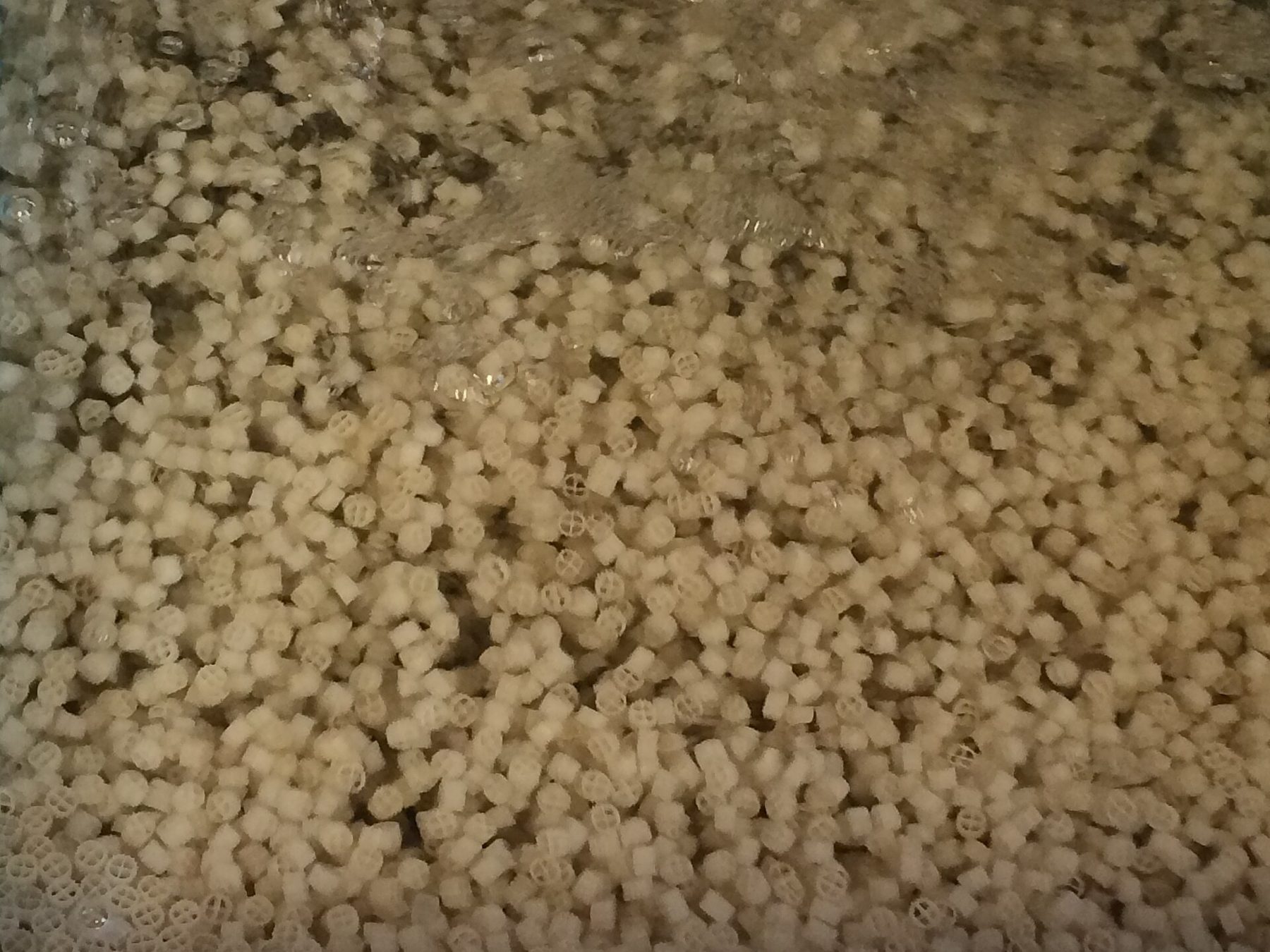
In a well-started recirculating system, the biological filter should keep total ammonia low under a steady feeding load. A sudden rise usually means one of a short list of problems: the filter is not yet mature; feeding has jumped ahead of the filter’s capacity; solids are decaying in a dead zone; pH has drifted; or aeration has failed and the bacteria as well as the fish are short of oxygen. The first response is rarely to add a chemical “fixer” and walk away. It is to find the cause, reduce the load if needed, and restore the conditions the bacteria require.
New systems are especially vulnerable. Nitrifying bacteria need time to colonise the media. Operators often speak of a start-up period measured in weeks, during which ammonia may rise and then fall as the first bacterial stage takes hold, after which nitrite may rise and then fall as the second stage catches up. Stocking too heavily or feeding too generously during that period is a common way to lose fish. A visitor to a demonstration workshop should ask how that start-up was managed, and how long it took in that room, with that water and that temperature.
Units can cause confusion. Laboratory reports may give ammonia as nitrogen (NH3-N or TAN, total ammonia nitrogen) or as NH3. The numbers are not interchangeable. Staff should know which unit their meter and their laboratory use, and they should record it the same way every day. A management platform is only as useful as the consistency of what is typed into it.
Nitrite: the intermediate that catches people out
Nitrite (NO2-) is the middle step in nitrification. Ammonia-oxidising bacteria produce it; nitrite-oxidising bacteria consume it. When the second group lags behind the first, nitrite accumulates. In many start-ups, the nitrite peak comes after the ammonia peak, and it can be more dangerous than operators expect if they have been watching only ammonia.
Nitrite is toxic because it interferes with the blood’s ability to carry oxygen, producing the condition sometimes called brown-blood disease. The effect is influenced by chloride in the water: in freshwater, a modest addition of salt is a known emergency measure in some husbandry traditions, because chloride competes with nitrite at the gill. That is a veterinary and husbandry decision, not a slogan, and it must be made with knowledge of the species and of any downstream plants in an aquaponic loop. The lasting solution is still a competent nitrite-oxidising community and a load the filter can bear.
Chloride, however, is not a substitute for a working filter, and it is not always appropriate. In an aquaponic workshop, plants may be sensitive to salt. In a system that later discharges to a tightly regulated tailwater plant, added ions have to be accounted for. Daily practice therefore treats salt, if it is used at all, as a temporary support while the biological cause is corrected.
Nitrate (NO3-) is the usual end product of this pathway in a well-aerated filter. It is much less toxic than ammonia or nitrite, but it still accumulates if water exchange is very low. In an aquaponic arrangement, plants can take up a share of that nitrogen. In a fish-only loop, nitrate is controlled by some combination of water exchange, denitrification (which is a separate, oxygen-poor process and must be designed, not improvised), and feed management. A demonstration workshop that includes plant beds should be able to explain how the plant harvest relates to the nitrogen budget of the fish, without pretending that the plants can absorb any load the operator chooses to create.
Dissolved oxygen: the number that cannot wait
Dissolved oxygen is the parameter that most often turns a problem into an emergency. Fish, bacteria, and decaying solids all consume it. Warm water holds less oxygen than cool water, and the fish’s demand usually rises with temperature and with feeding. A late-afternoon slump on a hot day, or a sudden drop after a heavy meal, is a classic pattern in many culture systems. In a recirculating hall the same logic applies, with the added fact that a failed blower or a blocked oxygen stone can empty the reserve very quickly at high density.
Practice therefore puts oxygen on a short leash. Continuous probes, alarm thresholds, backup aeration, and a clear rule about what to do when the alarm sounds — including reducing feed and, if needed, beginning a controlled harvest or a transfer — are more important than a decorative display of a single “good” reading during a visit. A visitor should ask what the overnight minimum looks like, not only what the mid-morning value is when guests are in the room.
Oxygenation hardware varies. Air stones, packed columns, oxygen cones, and low-head oxygenators all have their place. What matters in daily work is whether the device is matched to the density and the temperature, whether it has a standby, and whether staff can tell the difference between a probe failure and a real oxygen drop. Probes foul. They need calibration. A workshop that never questions a probe is a workshop that will one day trust a wrong number.
Carbon dioxide is the quiet partner of oxygen. Fish and bacteria produce it. In a tightly covered or poorly degassed system it can accumulate, lower pH, and stress fish even when dissolved oxygen looks adequate. Operators who only watch oxygen can miss a CO2 problem. Degassing, surface agitation, and an honest look at pH trends are part of the same daily discipline.
Temperature: the pace of everything else
Temperature sets the pace of metabolism, of bacterial activity, of oxygen solubility, and of the un-ionised fraction of ammonia. A species has a range in which it grows well and a narrower range in which a recirculating system is easiest to keep stable. Warm-water species of the kind discussed in a southern Chinese workshop — including research interest in mandarin fish (Siniperca, 鳜鱼) — will have different preferred bands from cold-water salmonids. Copying a northern salmon plant’s temperature plan into a Gulf or Southeast Asian building, or the reverse, is a common way to waste energy and stress fish.
Daily practice includes watching not only the average temperature but the rate of change. A heater or chiller that short-cycles, a door left open, or a heat exchanger that fouls can move the water faster than the fish or the filter can adjust. In water-scarce, hot regions, the cooling load may be the largest energy cost in the building. That is an operating-cost question as much as a biological one, and it belongs in any conversation before investment.
Temperature also decides how quickly a filter recovers after a disturbance. Nitrifying bacteria are slower in the cool and can be inhibited if the water is suddenly too hot. A workshop in Nansha, in a subtropical monsoon climate, will not have the same annual temperature curve as a hall in the Arabian Peninsula or in a highland Southeast Asian valley. Visitors should ask how the local system is held in range, and what it costs to do so, rather than assume that a number on a specification sheet will travel.
pH, alkalinity, and the quiet work of buffering
Nitrification consumes alkalinity. As the biological filter works, pH tends to fall unless something restores the buffer — a water exchange, a measured addition of a carbonate or bicarbonate source, or, in some designs, the influence of plant uptake and makeup water chemistry. If pH falls too far, both fish and bacteria suffer, and the ammonia equilibrium shifts even if the operator does not immediately notice.
Daily practice therefore includes alkalinity or at least a regular pH trend, not only a snapshot. Additions should be recorded, because an unexplained need for more and more buffer can be a clue that nitrification is running hard, that carbon dioxide is high, or that makeup water has changed. In an aquaponic workshop, plant health and pH are linked; a pH that is ideal for one side of the loop may be awkward for the other. The staff should be able to explain the compromise they have chosen.
A daily rhythm, not a single test
Good practice looks like a rhythm. In the morning, dissolved oxygen, temperature, and a visual check of the fish and the surface of the tanks. After feeding, a watch for leftover pellets and for any change in swimming or ventilation. At set times, ammonia and nitrite, and, less often but regularly, nitrate, alkalinity, and a calibration check on the probes. Solids filters are inspected and cleaned on a schedule, not when they finally clog. Dead fish, if any, are removed and recorded. Unusual colours, odours, or foaming are treated as information, not as housekeeping to be hidden before a visit.
A management platform can hold that rhythm in one place. It cannot create the rhythm. The Nansha company has described modules for water-quality monitoring, production logs, equipment control, alerts, and analysis. A visitor can usefully ask how those modules are used on an ordinary Tuesday, who receives an alert at night, and which readings are still taken by hand as a check on the machine. Those are fair questions in any language.
Laboratory confirmation still has a place. Handheld meters drift. A weekly or fortnightly sample sent to a competent lab, or checked on a second instrument, keeps the daily numbers honest. Microscopy of gill or skin mucus, and a look at the water for parasites or algae, belongs in the same weekly habit. That is the subject of a companion article on fish health and early detection. Water chemistry and health are not separate worlds.
What this means for a first visit to Nansha
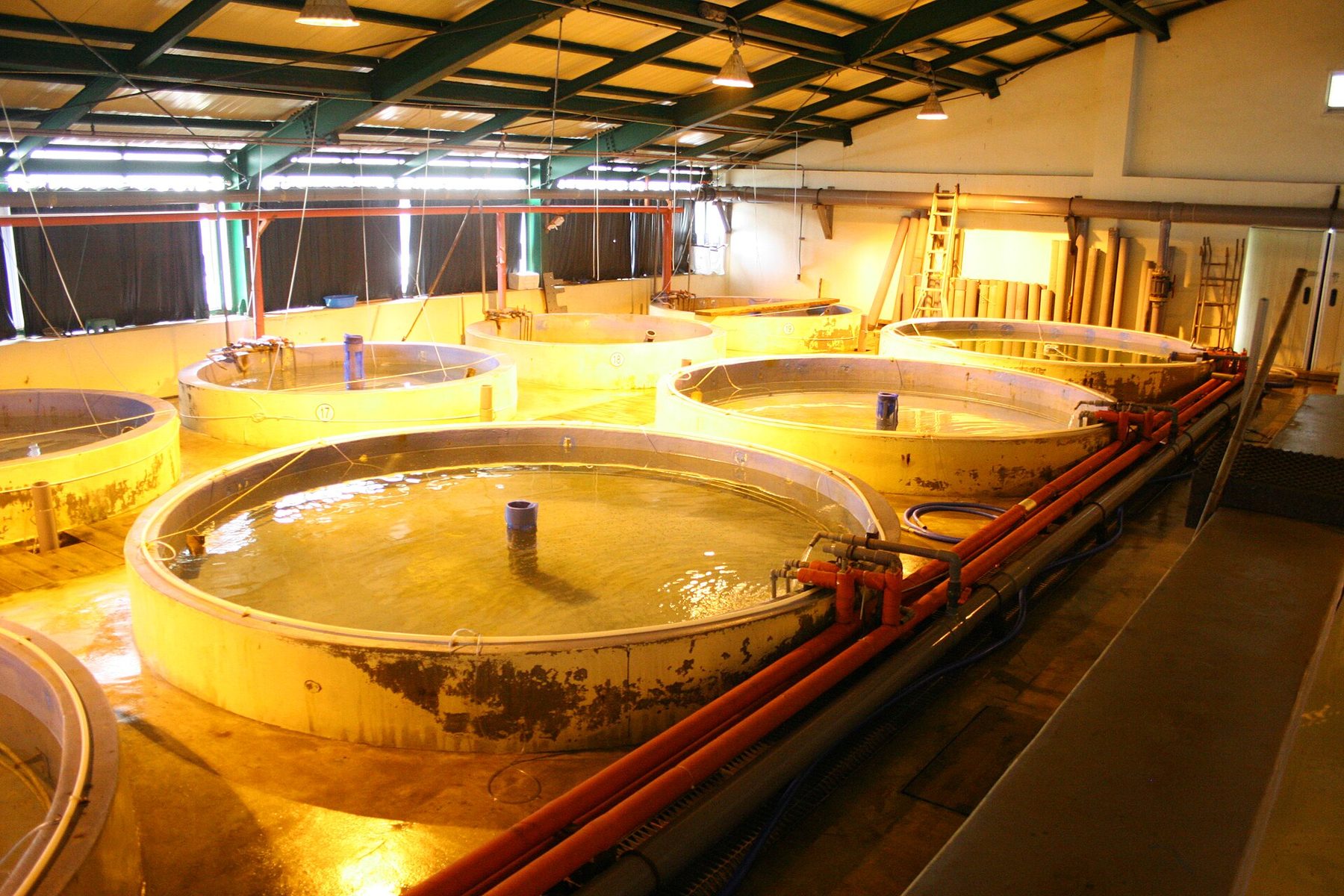
The workshop in Nansha is described, in its environmental approval, as a place of experiment and observation, with a designed annual experimental culture volume of about 50 tonnes. That scale is large enough to show a real loop and a real daily routine, and small enough that a visitor should not mistake it for a commercial factory of several thousand tonnes. The useful things to watch are the filter, the logs, the alarm practice, and the way staff talk about a bad day as well as a good one.
Gulf buyers, in particular, should leave with a clear sense of how temperature and energy interact with ammonia toxicity and oxygen, because those interactions will be sharper in a hotter, more energy-constrained building. Southeast Asian buyers may want to look at how a recirculating stage could sit beside ponds, and how tailwater from both stages might be treated. Neither conversation requires a claim that the Nansha numbers will be reproduced exactly on another site.
Water quality in RAS is daily work. Ammonia, nitrite, dissolved oxygen, and temperature are the core of that work, and pH and alkalinity keep the core interpretable. Instruments help. Platforms help. The habit of acting on a changing number, and of recording what was done, is what keeps fish alive. That habit is what a demonstration workshop can show, and it is what this article has tried to name in plain language.