What is already practiced, and what is still being built.
Each subject below is drawn from the public record. Labels distinguish work that can already be seen in Nansha from research or construction that is still in progress.
In practice
Water quality in a recirculating workshop
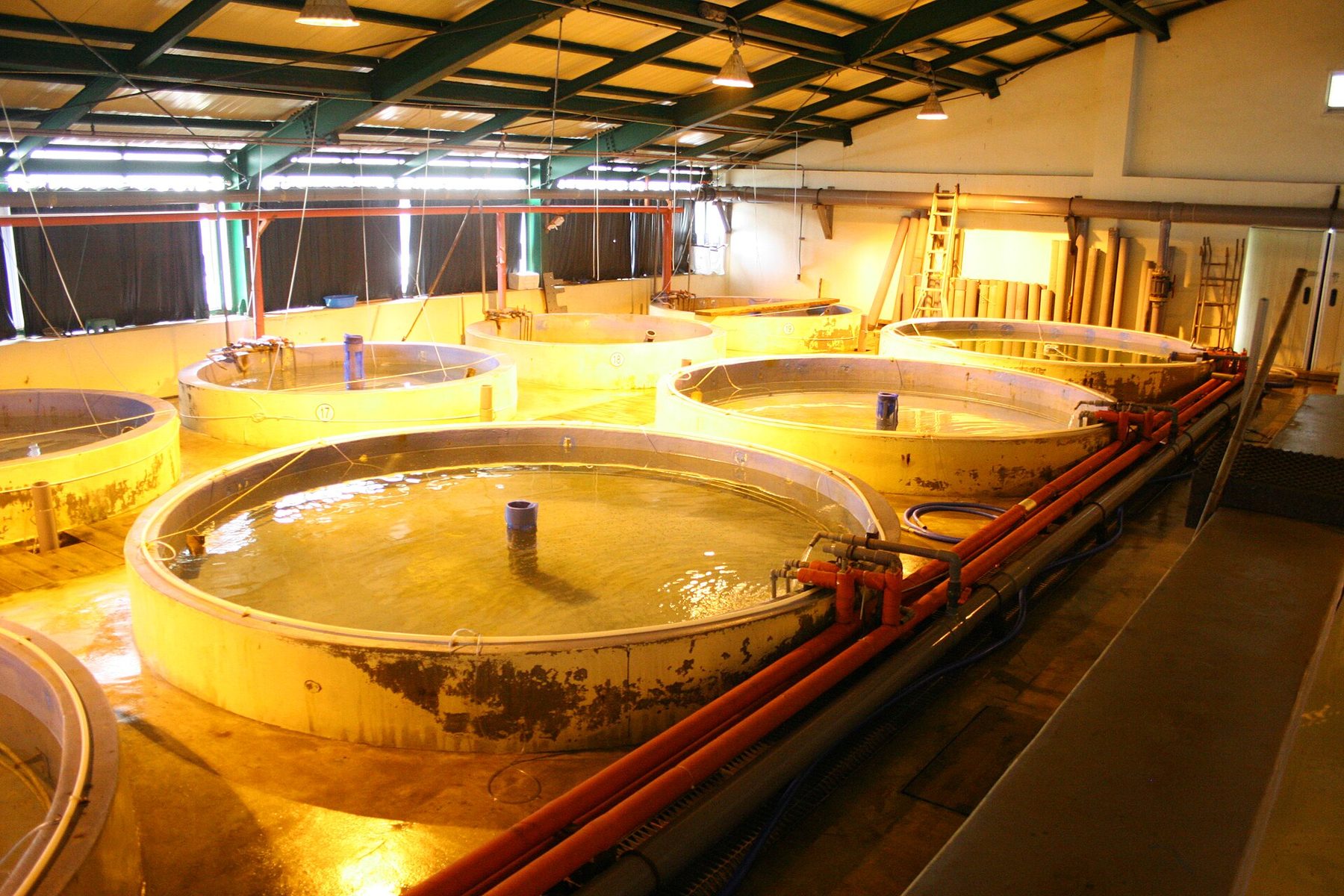
Stable RAS culture depends on watching ammonia, nitrite, dissolved oxygen, pH, and the state of the biological filter. Public accounts of the Nansha workshop describe the effort required to establish nitrification and to keep those indicators in a workable range. The fishery management platform is described as part of that daily attention.
This is practice inside a demonstration and experimental workshop. It is not described here as a turnkey water-treatment plant sold as a packaged export system.
Illustrative photograph of indoor RAS tanks (Wikimedia Commons, Rovag, CC BY 3.0). Not the Nansha workshop.
Announced product
Disease detection
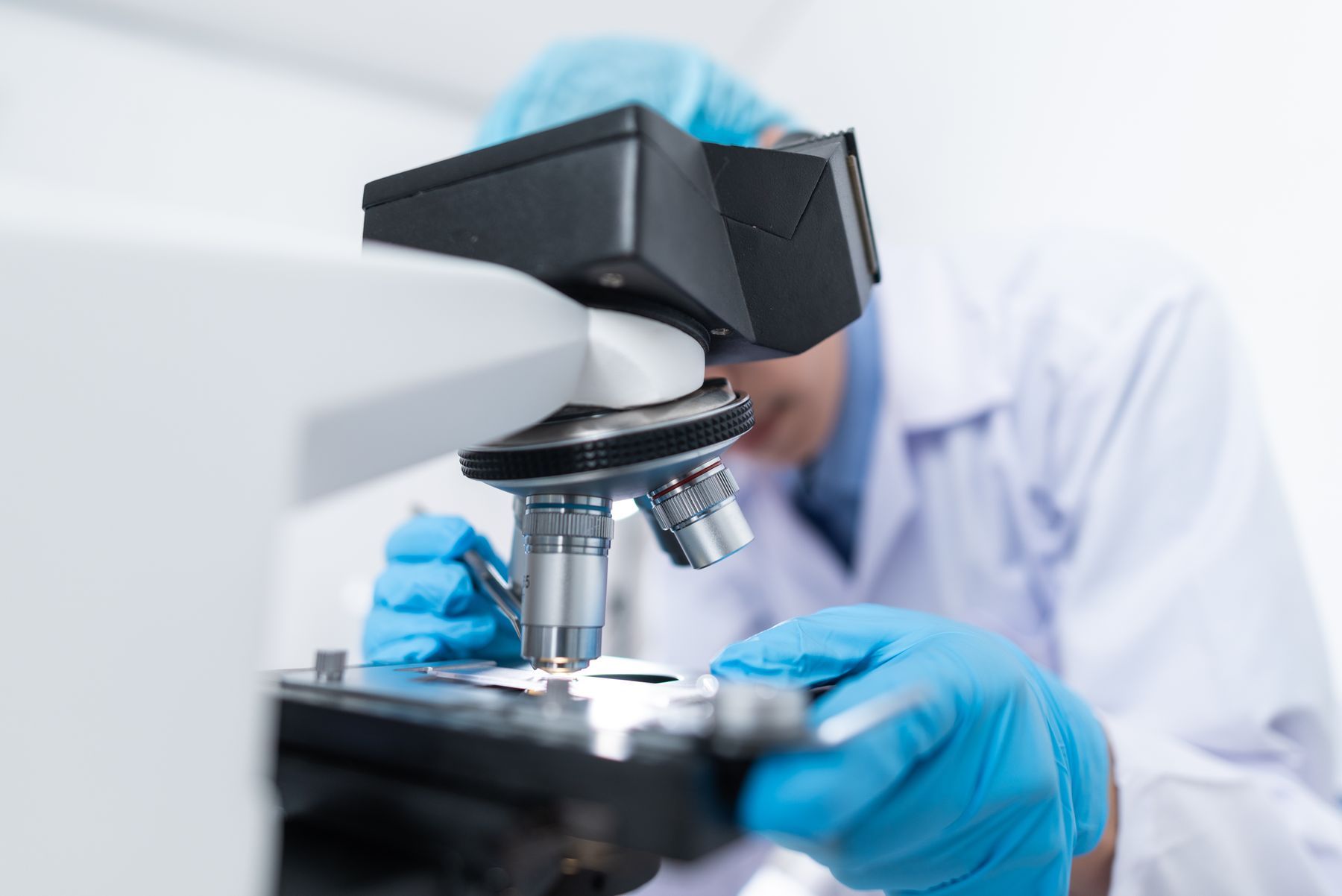
Qiuhao 5 and Qiuhao 8 are the publicly launched instruments for aquatic microscopy and identification support. They are intended to help farms and laboratories see parasites and related problems earlier than unaided inspection allows.
Company-stated identification figures appear on the products page, clearly attributed. A China-only WeChat mini-program exists and is not offered here as an overseas product.
Illustrative laboratory microscopy photograph (Pexels, Chokniti Khongchum). Not a Qiuhao instrument.
Under construction, as project owner
Tailwater recycling
The company is the construction and tendering party for a tailwater recycling facility of about 38 mu, tendered on 21 February 2025, with a bid cap of RMB 2,084,328.12. The published aim is to treat 100 tonnes of aquaculture tailwater and 950 kilograms of solid waste each day, and to process solids into fertilizer.
That is a facility being built for the park. It should not be read, on present evidence, as a finished product line of packaged treatment plants.
Publicly described business
Pond-relay aquaculture
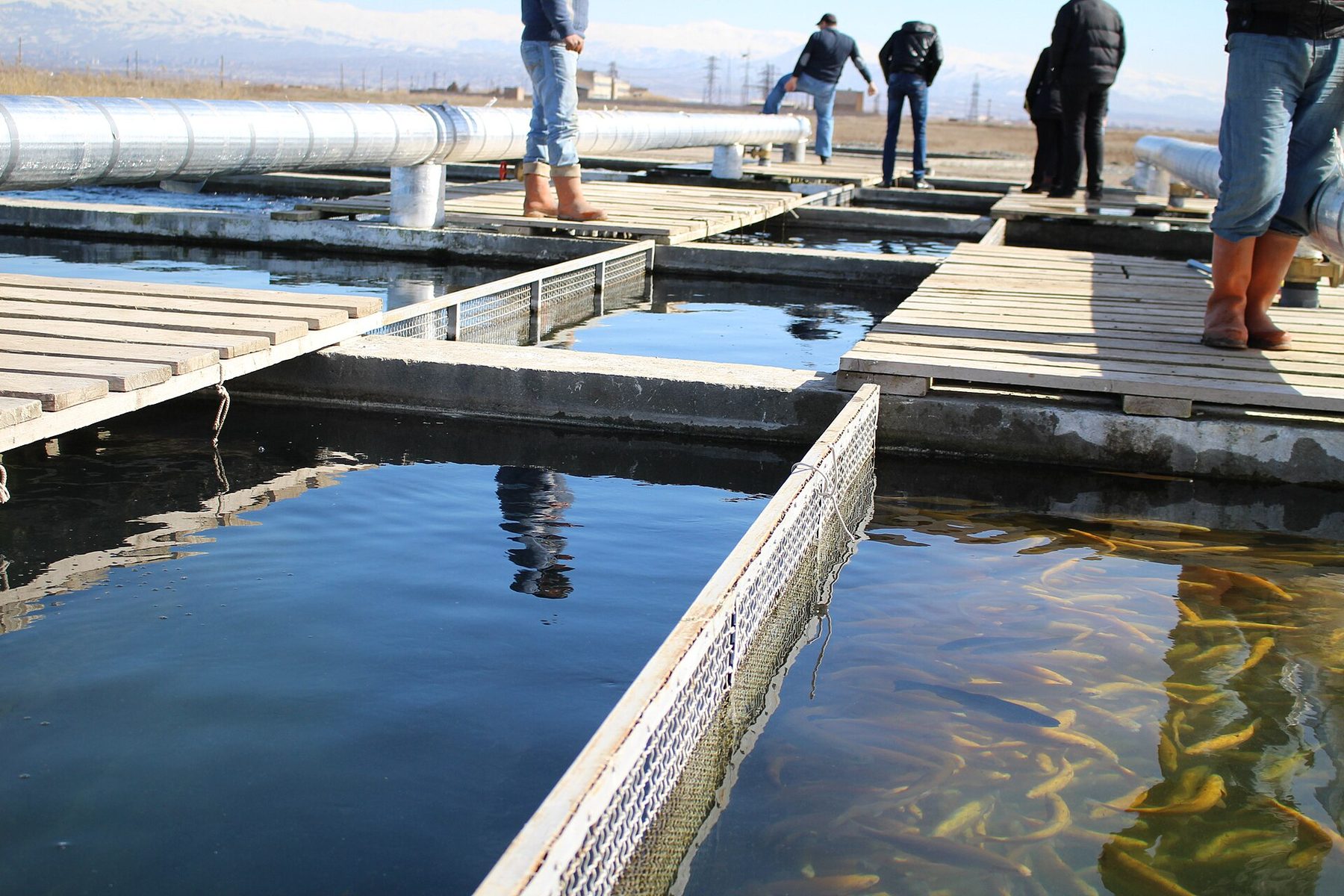
Alongside factory RAS operations, the company has been publicly described as practicing pond-relay aquaculture — combining more intensive stages with pond-based culture. Visitors can discuss how those stages are organized in Nansha.
Illustrative photograph of an outdoor fish farm (Wikimedia Commons, Narek75, CC BY-SA 4.0, Sipanik, Armenia). Not a photograph of Nansha ponds belonging to the company.
Research in progress
Mandarin fish in RAS
A research layout, still involving outside partners.
On 1 July 2024 the company invited research partners to support early fry domestication and broodstock husbandry of mandarin fish (Siniperca, 鳜鱼) in recirculating systems. The published tender cap was RMB 500,000. The work included early weaning from live prey and keeping broodstock in RAS.
The tender is evidence of an active research interest in a high-value warm-water species. It is also evidence that some core techniques were still being developed with external research support, rather than as a finished, fully in-house method ready to transfer unchanged. Mandarin fish is not presented here as a guaranteed commercial export stock-keeping unit.
What this page does not offer
It does not list standard plant capacities, performance guarantees, or a menu of export packages. Those would need specifications, references, and commercial terms that are not in the public record used for this site.