
A recirculating workshop produces numbers all day: dissolved oxygen, temperature, feed, a pump that starts or stops, a note that a fish was removed. A digital fishery management platform is a way of holding those numbers in one place, of raising an alarm when a reading leaves a chosen band, and of looking back at a week when something went wrong. Used well, it is a memory and a messenger. Used badly, it is a screen that no one believes, or a promise that a farm can be run from a sofa in another country.
This article describes what such platforms can reasonably do, what they cannot do, and how the Zhihui fishery management platform has been publicly described. It also states, clearly, that a disease-recognition WeChat mini-program associated with the company is a China offering only, not an overseas product promise. No software specification sheet is offered beyond what has been announced.
What a platform is for
The first job is to record. A probe that measures oxygen every minute is wasted if the values vanish at midnight. A feeding that was reduced because nitrite was high is wasted if nobody can find that fact next month. Production logs — stocking, grading, mortality, feed, treatments — are older than computers. A platform does not invent them. It makes them harder to lose and easier to search, if staff actually enter them.
The second job is to watch. Continuous water-quality monitoring can show a night-time oxygen slump that no one was standing there to see. An alert can wake a person, or at least create a record that a threshold was crossed. The value of the alert is only as good as the threshold, the probe, and the path to a human being who can act. A message sent to an unused account is not management.
The third job, sometimes, is to control. Some platforms can start a blower, adjust a valve, or follow a simple rule. Automation of this kind can be useful, and it can also be dangerous if it hides a failing sensor or a rule that no longer fits the density in the tank. Control should be introduced with the same conservatism as a new filter: tested, limited, and reversible by a person on the floor.
The fourth job is to analyse. Charts, comparisons between tanks, and a look at how feed and water quality have moved together can teach a team faster than a pile of paper. Analysis is only as honest as the data. A platform that is fed late, incomplete, or decorative numbers will produce decorative graphs. “Data analysis” on a public feature list should therefore be heard as a capability to be demonstrated, not as a claim that the farm has already been optimised by an algorithm.
What a platform cannot do
It cannot replace a competent technician. A biological filter in trouble, a fish flashing at the surface, or a sludge sump that is about to overflow will still need a person who can smell, see, and decide. A platform can hurry that person to the right tank. It cannot be that person.
It cannot make a bad probe honest. Dissolved-oxygen sensors foul. pH probes drift. A platform that displays three decimal places on an uncalibrated instrument is a more confident kind of error. Daily or weekly checks against a handheld meter, and a culture in which staff may challenge the screen, are part of using software in a wet room.
It cannot, by itself, run a farm in another time zone. Remote viewing of a dashboard may be useful for a manager who is travelling, or for a specialist who is asked to comment on a chart. It is not a substitute for night staff, backup power, or a local person who can change a valve. This site does not claim a worldwide remote-operations service, because no such network has been documented in the public record used here. Remote support, if it is discussed at all, should be discussed as a limited, honest option, not as a virtual farm.
It cannot discharge legal or veterinary responsibility. A suggested alert, or a suggested treatment path from a related identification tool, remains a starting point. Permits, food-safety rules, and professional judgement stay with the operator and with the laws of the place where the fish will be sold.
The Zhihui platform, as publicly described
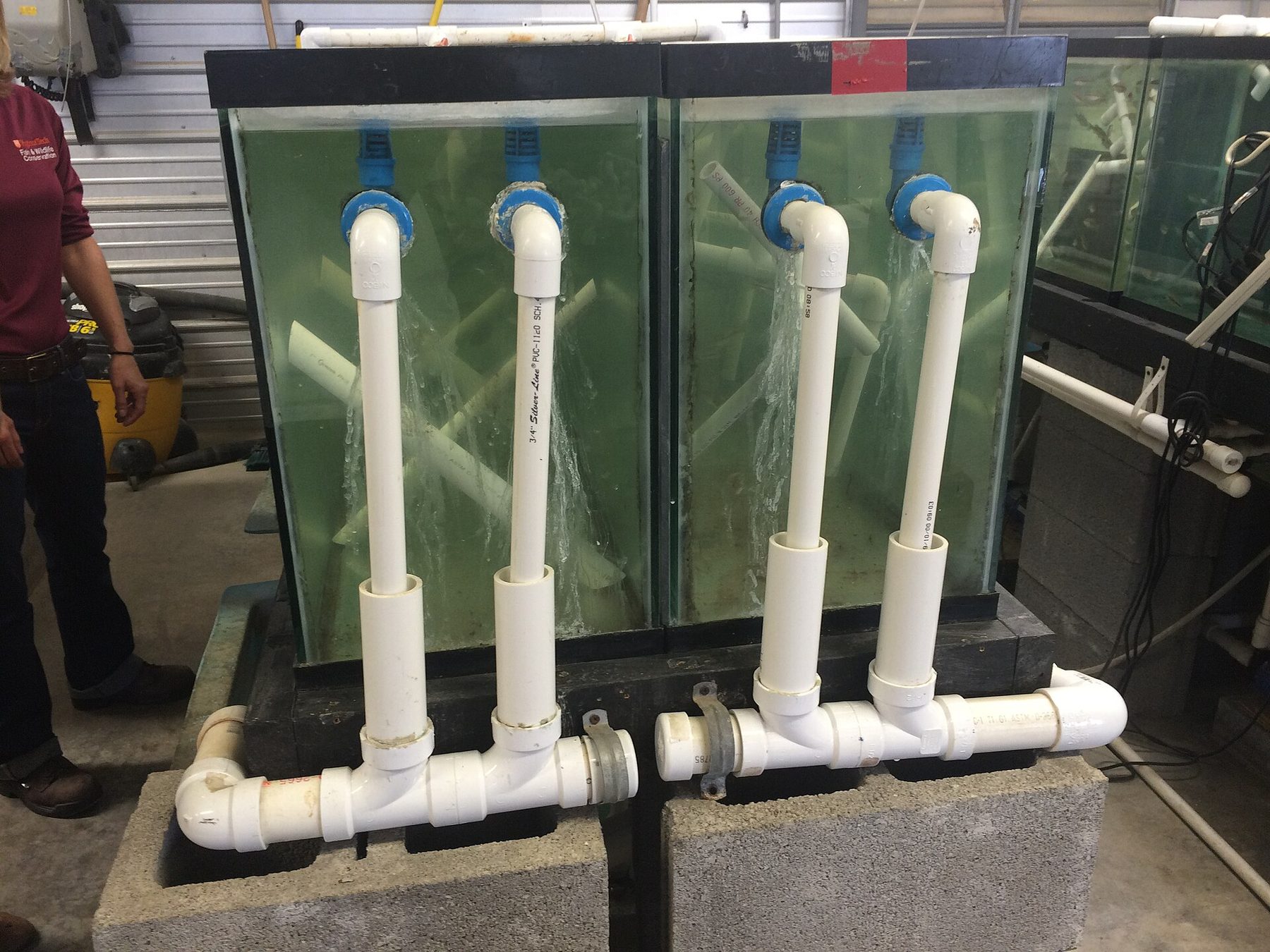
Public accounts of the Nansha workshop describe a self-developed fishery management platform used to monitor water, keep production records, control equipment, and raise alerts, and they name data analysis among its functions. Those modules — water-quality monitoring, production logs, equipment control, alerts, and analysis — are the announced feature list reproduced on this site’s products page. They are not a version number, a language list, a cybersecurity audit, or a licence agreement for use outside China.
A visitor can reasonably ask to see the platform as it is used on an ordinary day: who logs in, what a night alarm looks like, how a feeding is entered, and how a week of ammonia readings is reviewed. Those are demonstration questions. They should not be inflated into a claim that the software is already a finished export product with support in every language and on every device. If a future commercial conversation about software takes place, it will need its own terms. This article does not pre-write them.
Integration is a practical issue. Probes, controllers, and radios fail in humid rooms. A platform that only works on one brand of sensor, or only when the local network is perfect, will disappoint. Ask what happens when the network drops, and whether the life-support equipment still runs on its own. Life support should never depend on a dashboard remaining online.
The WeChat mini-program is a China offering
A disease-recognition WeChat mini-program has been offered free of charge in China, including for users who do not purchase a microscope. WeChat is a Chinese super-app environment. A mini-program that lives there is designed for that channel, for that login habit, and, in this case, for a domestic audience. This site states plainly that the offering is a China-channel service. It is not an overseas product promise, and it should not be listed in a Gulf or Southeast Asian procurement as if it were already a local app store item.
Buyers outside China who are interested in identification support should ask, instead, about the instruments, about image and report workflows that could be used in their own setting, and about what is not yet available. That conversation belongs with the article on fish health and microscopy, and with a live demonstration, not with an assumption that a WeChat tool will travel unchanged.
Data, language, and trust
A platform holds information that a farm may regard as sensitive: production, mortality, perhaps locations and staff names. Questions about who owns the data, where it is stored, and who can see it are legitimate, especially if a future arrangement would cross a border. This site does not invent a data-residency policy for the company. It does recommend that buyers ask, and that they not skip the question because the graphs are attractive.
Language and units matter. A mixed team may need displays in more than one language, and they will need a consistent unit for ammonia, for weight, and for temperature. A platform that cannot be explained to the people who feed the fish will become a toy for the office and a rumour in the hall. Training is therefore part of any honest software discussion, just as it is part of any honest RAS discussion.
Trust is built in the first month, when the numbers on the screen match the numbers on the handheld meter, and when an alert is shown to have been useful rather than noisy. If the first month is full of false alarms, staff will silence the system. A conservative approach is to begin with a few reliable probes and a few reliable logs, and to add complexity later. That approach is less dramatic in a demonstration, and more likely to be still in use a year later.
Questions for a visit
May I see yesterday’s log, including an alert if one occurred? Who is woken at night, and by what path? Which sensors are calibrated how often? What still runs if the network fails? How are production events entered, and by whom? What, exactly, is meant by equipment control and by analysis in this workshop? And, separately, do you understand that the WeChat mini-program is not what I am buying if I farm outside China?
Digital platforms can make a good recirculating workshop easier to review and harder to neglect. They cannot make an unready team ready, and they cannot carry a farm across a border by themselves. The Zhihui platform should be examined as a set of announced functions used in a Nansha workshop, at experimental scale, and judged on what can be shown. That is a serious standard, and it is a fair one.
Choosing and testing a platform without theatre
If you are comparing tools, write down the jobs you actually need in the first six months: a reliable oxygen and temperature record, a place to enter feed and mortality, an alert that reaches a named person, and a way to export a week of data into a form your own organisation can archive. Features beyond that list can wait. A demonstration that begins with a complex analytics screen, and cannot show last night’s oxygen curve, is a demonstration in the wrong order.
Ask for a test that includes failure. Disconnect a probe, or ask what the screen looked like on a day when one failed. Walk out of the wireless coverage if there is any, and see what still runs. Try entering a record in the language your technicians actually speak. If a translator is required for every key, the tool is not yet a workshop tool. These tests are slightly uncomfortable in a visit, and they are more informative than a prepared video.
Cost should be discussed as a lifetime, not as a licence only. Probes, replacements, a computer that can live in a humid office, training time, and the hours spent cleaning bad data are part of the price. A free or cheap interface that demands constant expert attention may be more expensive than a quieter tool. The WeChat mini-program’s free availability in China, for identification support, is a separate product story and should not be used to imply that every piece of software around the company is free, or that it is available everywhere.
Platforms, instruments, and the temptation to merge every tool
It is tempting to imagine a single product that watches water, identifies parasites, controls pumps, and writes a report for a ministry. Real workshops usually have a looser bundle: a monitoring and logging platform, a microscope that may or may not be connected to a recognition tool, and mechanical controllers that should run even when software does not. Keeping those layers distinct is a safety practice. It is also a commercial practice, because it allows a farm to replace one piece without throwing away the rest.
Qiuhao instruments and the fishery management platform have been announced as parts of the same company’s public offering, and they may share a philosophy of record-keeping and of earlier warning. They should still be judged on their own demonstrations. A visitor who is mainly interested in water logs should not be required to accept an identification story, or the reverse. This site describes them on the same products page, with the same conservative habit, and it keeps the China-only mini-program in its proper place.
In the end, a digital platform is a way of taking daily RAS practice seriously enough to write it down and to notice when it changes. That is a modest definition, and a useful one. If a later, more ambitious product is offered, it can be added to this site when it can be described from public, checkable facts. Until then, the standard is what can be shown in a Nansha workshop, to a visitor who is allowed to ask unglamorous questions.
Paper, phones, and the first month of use
Some excellent workshops still run on a whiteboard and a notebook, and they should not be ashamed of that. A platform is an improvement only when it is more reliable than the book it replaces. In the first month, running both in parallel is a sign of seriousness, not of backwardness. When the two records disagree, the disagreement is data. It may reveal a missed feeding, a probe that was not placed in the current, or a habit of rounding numbers so that they look tidy. Those discoveries are the real installation process.
Phones are useful and fragile. A photograph of a tank, a quick message to a supervisor, or a reading typed on a small screen can close a gap. They can also scatter the official record across private chats that no later auditor can reconstruct, and that may not exist in a form your organisation is allowed to keep. A platform should have a clear rule about what belongs in the official log and what may remain a casual message. Visitors who work in regulated public agencies should ask this question early, because their archives and their procurement rules will not be impressed by a personal chat history.
If, after a demonstration, you still cannot say who writes the official number and who is allowed to change it, you do not yet have a management system. You have a display. The difference is worth insisting on, in Nansha or anywhere else, before software is treated as part of a farm’s backbone.