
A demonstration recirculating workshop is most useful when the visitor arrives with a way of looking. The tanks will be impressive or ordinary, the pipes will be tidy or not, and a host will have a story to tell. What distinguishes a valuable visit from a polite tour is a set of questions that can be answered on the floor, and a refusal to confuse a well-lit room with a proven design for another country.
This article is a practical briefing for farms, researchers, and public agencies who may visit the Nansha workshop of Guangzhou Nansha Zhihui Agricultural Technology Co., Ltd. It is written so that a first walk-through can be more precise. It does not invent performance guarantees, and it reminds the reader of the experimental scale at which the park has been approved to culture fish.
Before you travel
Write down what you hope the visit will decide. Are you trying to understand recirculating practice in general? Are you interested in the fishery management platform, in Qiuhao microscopes, in pond-relay, or in tailwater? A host can show more if the purpose is named. A vague wish to “see the technology” often produces a walk past tanks and a conversation that could have been had by email.
Read the public facts about scale before you land. Bay Area Agri Valley has a published park investment of about RMB 853 million and a planning land area of about 34,104 square metres. The environmental approval of 2 February 2026 describes a designed annual experimental culture volume of about 50 tonnes. Those figures must not be fused. You are visiting a demonstration and experimental setting, and a park that also includes research and cultural buildings still being built. You are not walking into a multi-thousand-tonne commercial factory, and you should not ask the staff to pretend otherwise.
Prepare a short dossier on your own site: climate, water source, species, intended density, energy price, labour, and the permit you will need to discharge. A useful conversation compares two real places. It does not ask a Nansha technician to design your farm in an afternoon without those facts. If official telephone and email for the company have not yet been published, use this site’s visit-request form to prepare a message you can carry, and wait for confirmed contact details or deliver the request at the address given on the contact page.
Think about language and time. A serious visit needs hours, not twenty minutes, and it needs a way to ask technical questions with precision. If you will need an interpreter, say so in advance. If you have people on your side who understand pumps, water chemistry, or fish health, bring one of them. A visit made only of senior managers, with no one who can look at a filter, is easier to impress and harder to learn from.
The first walk: tanks, flow, and housekeeping
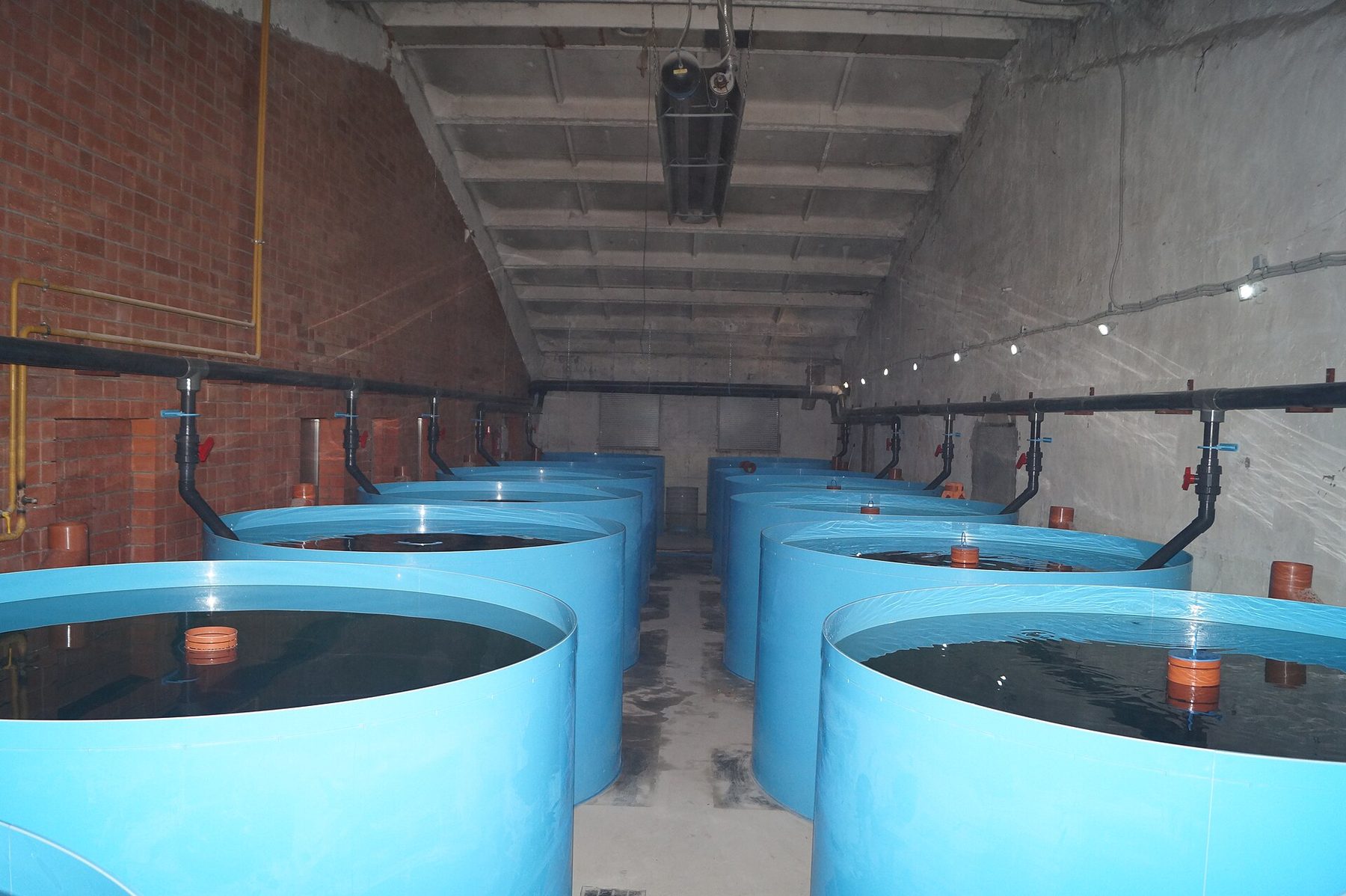
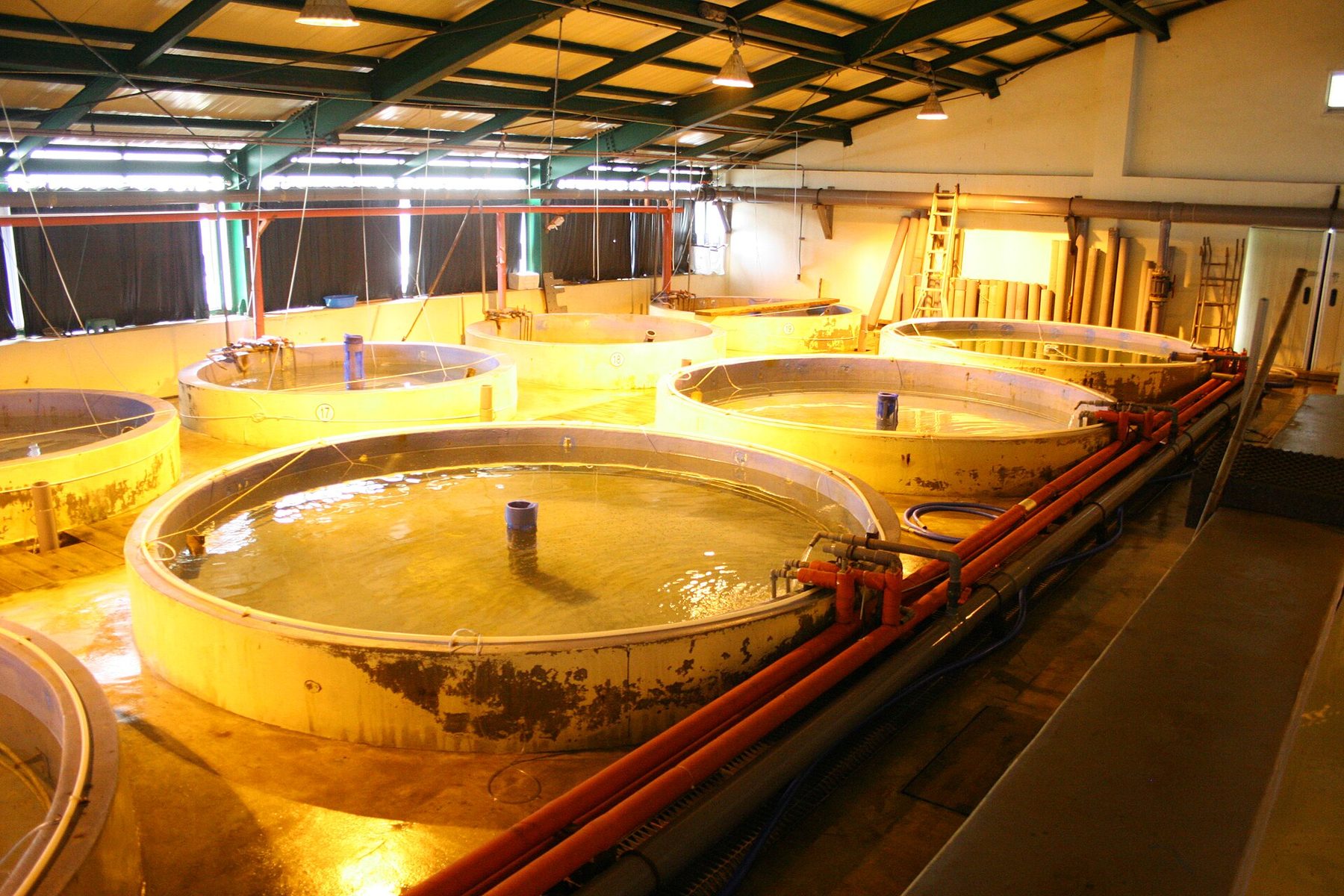
Begin with the path of the water, not with the brand names on the machines. Where does water leave the tank? Where are solids taken out? Where is the biological filter, and how can you see that it is working — a viewing port, a sample point, a set of readings? Where is oxygen added, and where is carbon dioxide allowed to leave? If the host cannot walk you around the loop in order, that is already information.
Look at housekeeping with the same attention you give to hardware. Are aisles clear? Are dead fish absent from the tanks? Are nets hanging where they belong, or lying in puddles? Is sludge in a defined container, or in a corner? A recirculating system is unforgiving of neglect, and a demonstration workshop should be willing to show an ordinary working state, not only a prepared façade. It is fair to ask whether what you see is typical of a Tuesday without guests.
Watch the fish, not only the architecture. Are they ventilating hard, flashing, or crowding at an inlet? Is feed left on the surface long after a meal? A visitor who never looks down into the tank will remember the room and miss the animals. If you are invited to approach, follow biosecurity rules: footwear, hands, and a refusal to dip an unauthorised net.
Ask how alarms work. Who is called at night if oxygen falls? How long can the system run on backup power? When was the last real emergency, and what was learned? A workshop that has never had a problem is either very new, very lucky, or not telling the whole story. A workshop that can narrate a problem and a correction is usually the more trustworthy teacher.
Water quality, logs, and the platform
Ask to see yesterday’s numbers, not only today’s. Ammonia, nitrite, dissolved oxygen, temperature, and pH should exist as a series. A single printed sheet prepared for visitors is weaker evidence than a log that includes an awkward day and a note about what was done. If a fishery management platform is in use, ask who enters data, who receives alerts, and which readings are still taken by hand as a check on the probes. Public descriptions of the Nansha platform name monitoring, production logs, equipment control, alerts, and analysis. The visit is the place to see how those words look in practice.
Calibration is a useful, slightly awkward question. When were the oxygen probes last calibrated? What happens when a probe disagrees with a handheld meter? A team that welcomes the question is usually a team that already argues with its instruments, which is a healthy habit. A team that is offended may be too attached to the display.
If the workshop is aquaponic, walk the plant side as carefully as the fish side. Ask how harvest of plants is related to feeding of fish, what happens to plant waste, and how pH is kept in a range that both sides can bear. An explanatory diagram is helpful. A measured story about a real week is better.
Health, microscopy, and biosecurity
Ask how sick fish are noticed and what happens next. Is there a microscope on site, and may you see how a slide is prepared? If Qiuhao instruments are part of the reason for your visit, say so, and ask for a demonstration that includes a real sample, a stored image, and a frank discussion of company-stated identification figures — labelled as company-stated, not as independently certified results. Ask what would be required to try the workflow on parasites that matter in your own country.
Biosecurity should be visible in small things: a visitor path, a rule about food and cigarettes, a quarantine or isolation option, and staff who can explain how incoming stock is handled. A recirculating hall is not automatically biosecure. A visit is a chance to see whether the word is a practice or a poster.
Scale, energy, and the rest of the park
Keep the 50-tonne experimental design in mind when you ask about production. Questions about feed conversion, survival, and energy use are fair if they are framed as practice in this workshop, not as guarantees for a plant you have not yet designed. Ask how much electricity the loop uses in a hot week, what the tariff is, and what the backup arrangement costs to keep ready. Energy is often the quiet surprise for first-time RAS buyers, especially in hot, water-scarce regions where cooling and aeration run hard.
Ask also about the rest of the park. Phase 2 research and cultural buildings, a planning permit issued in December 2025 for Building 3, and a tailwater recycling tender from February 2025 are all public facts. They help you understand that you are in a park still being built, not in a finished export showroom. If pond-relay is practiced, ask to hear how transfers are timed and how effluent from both stages is thought about, and do not assume that every pond you see from a Nansha road belongs to the company.
How to close the visit without false certainty
Before you leave, write down what was shown, what was only described, and what remains unclear. Note the names of people you spoke with, and the questions they could not yet answer — including official contact channels if those are still to be confirmed. A good visit produces a list of follow-up work, not a sudden decision to copy the room.
Do not leave with a CE mark that was not shown, an overseas reference that was not documented, or a sense that the park investment figure is a production capacity. Do leave with a clearer picture of daily RAS practice, of the platform and instruments as they are actually used, and of whether a further technical conversation is worth having. That is a successful first visit: not a completed deal, and not a disappointed tour, but a more exact view of a workshop that can be walked through at experimental scale.
The articles on water quality, health and microscopy, tailwater, energy and operating costs, and first questions for Gulf or Southeast Asian buyers are intended to sit beside this one. Read them if you like, then come, if you can, and test the questions on the floor.
People, translation, and what may be photographed
A workshop is a place of work before it is a place of display. Staff may be busy with a feeding, a filter clean, or a laboratory task that cannot wait for a visiting schedule. Courtesy is part of technical seriousness: arrive on time, stay on the agreed path, and do not give instructions to technicians who are not yours. If you wish to photograph, ask first. Some rooms, and some computer screens, may be off limits for good reasons of safety, privacy, or unfinished work. Official photographs of the company’s own facilities are still being prepared for this public site; a visitor should not assume that every image taken on the day can be published.
Language will shape what you learn. Technical Chinese, technical English, and technical Arabic do not always share a word for the same filter or the same reading. If you rely on an interpreter, brief that person on ammonia, nitrite, dissolved oxygen, and the difference between a project owner and an equipment vendor, so that those ideas are not flattened into a single word for “machine.” A printed list of your questions in more than one language can save a visit from becoming a vague impression.
Take notes in the room, and mark clearly what you saw with your own eyes, what you were told, and what you only inferred. Memory flatters tidy pipes and forgets a missing backup log. If two members of your party attend, compare notes the same evening. Disagreements between you are useful; they usually point to something that was not fully explained.
Comparing what you see with what you need
After the walk, sit down — even at the airport — and compare the workshop with your own constraints, point by point. Climate: can this temperature plan travel? Water: is your source harder, saltier, or less reliable than what this loop enjoys? Species: are you looking at a fish this team actually works with, or at a neighbour of that fish? Labour: do you have, or can you train, people who can do what you have just watched? Energy: have you already asked for a frank conversation about kilowatt-hours, or did you skip it because the tanks were interesting? Discharge: do you know where your sludge would go?
If several answers are “I still do not know,” the visit has done part of its job: it has named the gaps. A second, more focused conversation can then be requested, perhaps with a water-quality specialist or a person who works on the platform or the microscopes, rather than a repeat of the same general tour. If official contact details are still marked “to be confirmed,” keep your written summary until they are published, as the contact form on this site already advises.
It is also fair to decide, after a visit, that this particular demonstration is not the right partner or not the right moment. A workshop at experimental scale, in a park that is still adding research buildings, may be an excellent place to learn and a poor place to expect a fully specified export plant. Those two conclusions can be true together. Leaving with that clarity is a better outcome than leaving with an inflated story to tell at home.
A short checklist you can print
The loop, in order, with your own sketch. Yesterday’s water-quality numbers, including an awkward day if one can be shown. Probe calibration and a handheld check. Alarm path and backup power, with a date of last test if it exists. Feed method and leftover pellets. Fish behaviour in more than one tank. Health routine and, if relevant, a microscope demonstration that does not overclaim. Incoming-stock and visitor rules. Sludge and tailwater, even if the park facility is still under construction. Pond-relay, if it is part of your interest, with a warning not to assume that every local pond is the company’s. People you met, questions still open, and a refusal to carry home a certification or an overseas reference that was not actually shown.
If you work through that list, you will have used a demonstration visit as it ought to be used: as a look at practice, at experimental scale, in a real place. The rest of the decision — whether to go further, and on what terms — can then be made without the fog that a purely ceremonial tour leaves behind.