
Recirculating aquaculture reduces the volume of water a farm uses, but it does not abolish waste. Solids and a concentrated effluent still leave the loop. If they are dumped untreated, the farm has only moved its pollution into a smaller pipe. Tailwater treatment and nutrient recovery are therefore part of responsible RAS practice, not an optional afterthought. They are also, in many jurisdictions, a condition of being allowed to operate at all.
This article explains what tailwater is, why solids should be captured early, how nutrients can be recovered rather than merely diluted, and how a published 2025 tender in Nansha describes a recycling facility the company is building as project owner. That tender is not treated here as proof that packaged treatment plants are already sold abroad. It is treated as a documented local project, with published numbers, from which a visitor can learn what questions to ask.
What leaves a recirculating loop
A recirculating system is often praised for its high reuse rate. That praise is fair only if the reader remembers the remainder. Makeup water is added. Filter backwash and sludge are removed. A fraction of the process water is exchanged to control nitrate, colour, or dissolved organics. The stream that leaves — sometimes called tailwater, effluent, or discharge — carries dissolved nutrients, fine solids that escaped the first filter, and whatever salts or treatment residues have been added. It is smaller than the discharge of a flow-through farm of similar biomass, but it is more concentrated.
Solids are the first fraction to think about. Uneaten feed and feces are rich in organic matter and phosphorus. If they stay in the culture water they dissolve, consume oxygen, and load the biological filter. If they are captured as a sludge, they become a material that can be stored, dewatered, composted, or, in some designs, processed into fertilizer. The quality of that sludge depends on how quickly it was removed and how much water still rides with it. A wet, anaerobic sump will smell, lose nitrogen as ammonia or gas, and be harder to handle later.
Dissolved wastes are the second fraction. After a biological filter has done its aerobic work, much of the nitrogen is present as nitrate. Phosphorus, potassium, and dissolved organic compounds remain as well. An aquaponic bed can take up a share of those nutrients. A dedicated constructed wetland, a denitrifying reactor, or a conventional wastewater step can take up more. No single plant bed should be assumed to “solve” the discharge of a heavily fed fish hall. The nitrogen budget has to be calculated, not hoped for.
Regulators care about both fractions, and they care about pathogens and about odd chemicals. A farm that uses salt, disinfectants, or medications must know whether those substances will arrive at the discharge point, and whether they are allowed. This is one reason why treatment advice cannot be copied blindly from one country to another.
Capture early, treat on purpose
The cheapest kilogram of waste to manage is the one that is still a particle. Drum filters, settling tanks, and swirl separators exist to catch solids before they dissolve. Daily practice includes emptying and rinsing those devices on a schedule, and keeping the captured sludge out of the rain and out of the culture loop. A visitor who only admires clean tanks, and never asks where the sludge goes, has not yet seen the farm.
Once captured, sludge can be thickened, dried, composted, or digested. Each path has a cost in energy, land, labour, and odour control. Nutrient recovery — the idea that phosphorus and organic matter should become a product rather than a liability — is attractive, but it is only real if there is a user for the product, a method that meets agricultural or regulatory standards, and a mass balance that makes sense. A bag labelled “fertilizer” that nobody will take is still a waste.
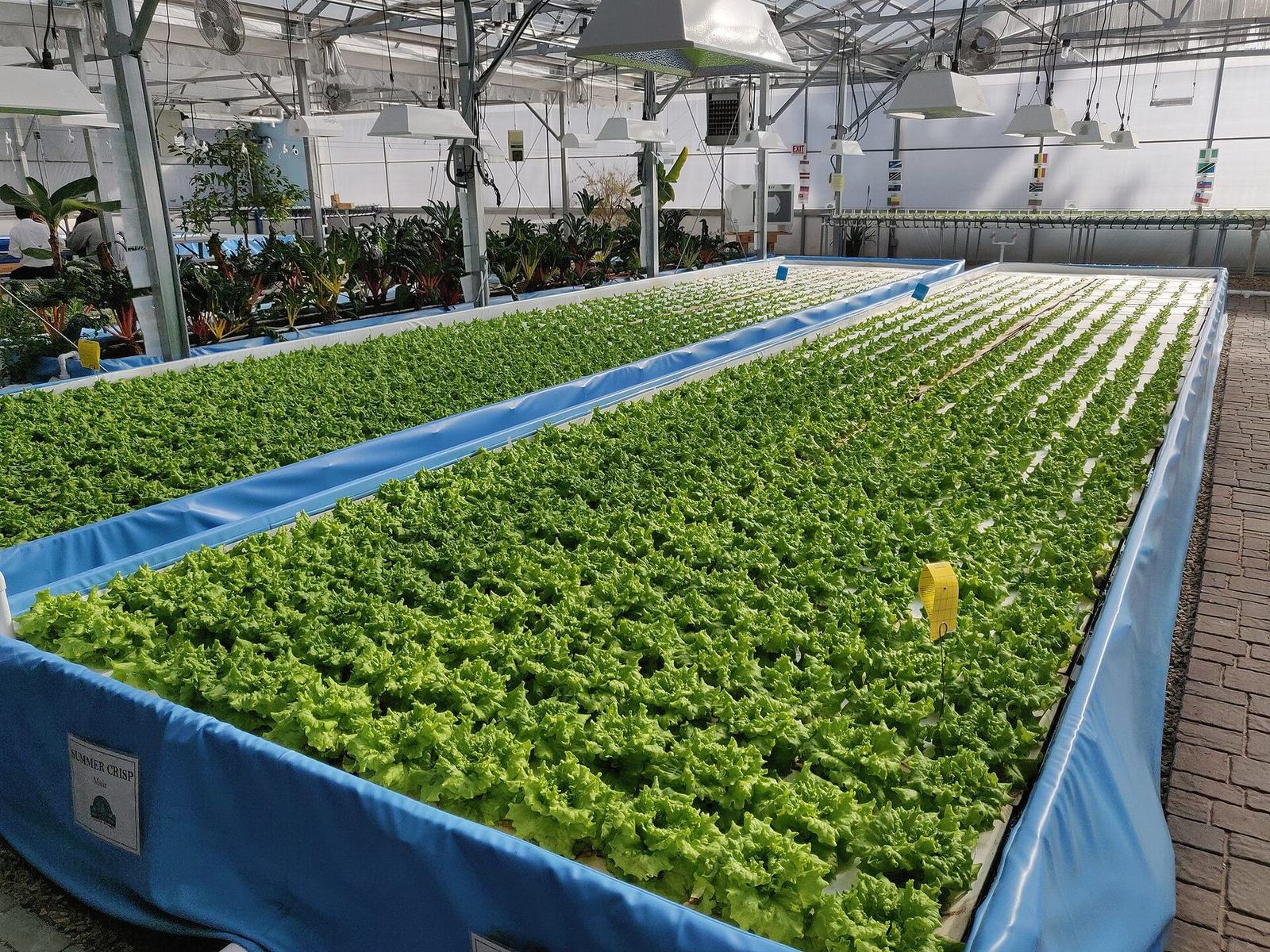
Dissolved nutrients need a different set of tools. Plants in an aquaponic workshop are one such tool, and they have the advantage of producing a second crop. They also have limits of light, area, and species tolerance. A greenhouse full of lettuce will not automatically keep pace with a heavily stocked fish hall in midsummer if the numbers have not been designed together. Other options include hydroponic or soil-based reuse, algal systems, constructed wetlands, and engineered reactors. The right choice depends on climate, land, and the legal definition of the discharge.
Energy and reliability belong in the same design. A tailwater plant that stops when a pump fails will overflow or bypass. Backup, alarms, and a place to hold waste for a short time are part of treatment, just as they are part of the fish loop. A demonstration visit should include the unglamorous corner where sludge is stored, not only the shining culture tanks.
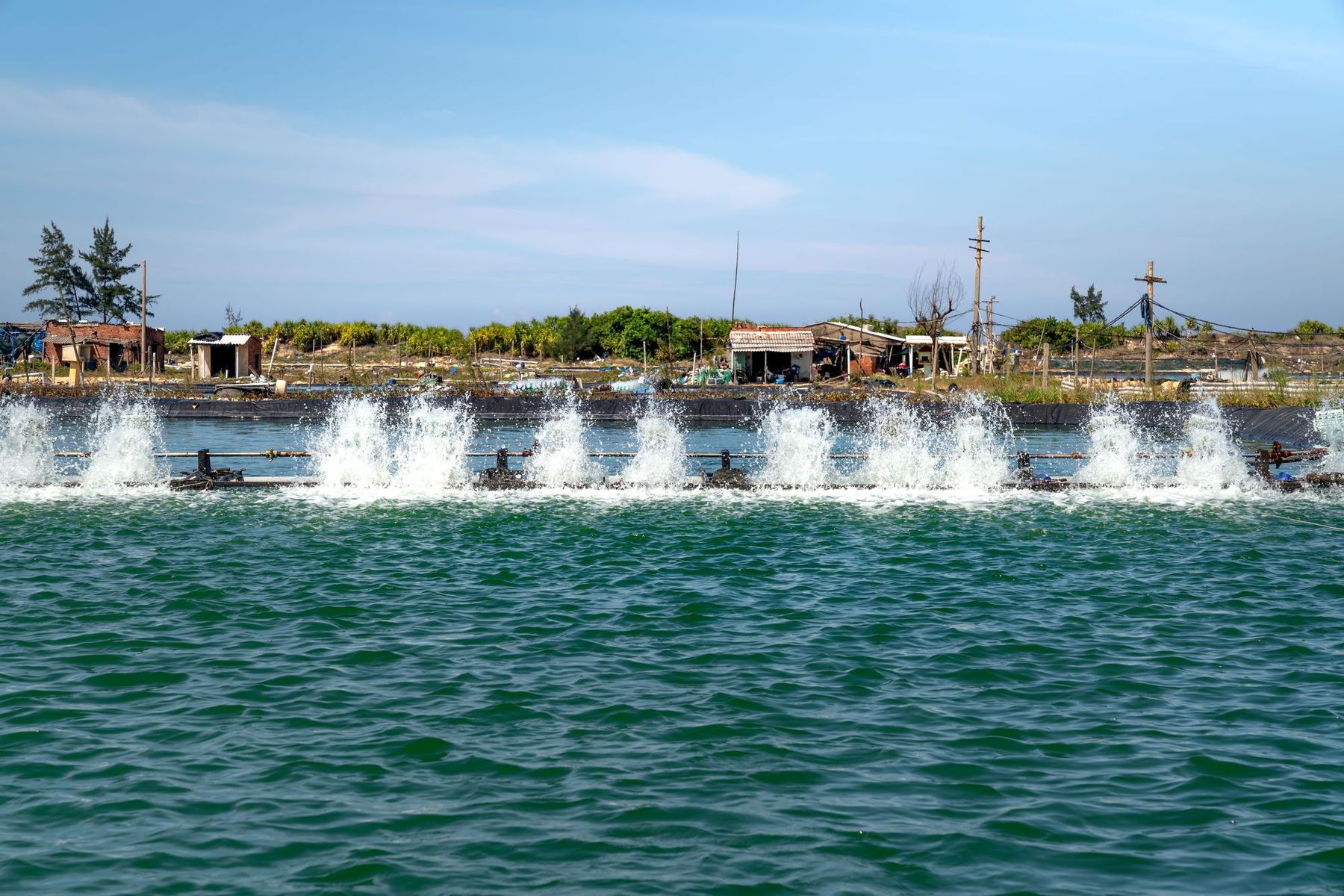
The Nansha tailwater tender, read carefully
On 21 February 2025, Guangzhou Nansha Zhihui Agricultural Technology Co., Ltd. published a tender for a tailwater recycling project of about 38 mu. The bid cap was RMB 2,084,328.12. The published aim is to process 100 tonnes of aquaculture tailwater and 950 kilograms of solid waste per day, with solids processed into fertilizer. In that document the company is the construction and tendering party — the project owner — not a contractor selling a finished plant to a foreign buyer.
Those numbers are useful because they are specific. One hundred tonnes of tailwater a day is a defined hydraulic load. Nine hundred and fifty kilograms of solids a day is a defined mass of material that must be moved, stored, and processed. Thirty-eight mu is a land footprint for a park-scale facility, not a compact skid that fits in a shipping container. The bid cap tells a reader that this is a substantial local works project, not a laboratory bench test, and also that it is far smaller than the park’s overall published investment of about RMB 853 million. The two figures must not be blended into a story of a giant commercial factory.
The environmental approval for Bay Area Agri Valley describes experimental and observational fish culture with a designed annual experimental volume of about 50 tonnes. A tailwater plant sized in the tender as above is part of the park’s environmental management, not a claim that the company already exports treatment packages. Visitors may ask to discuss the design intent, the fertilizer pathway, and the current state of construction. They should not be told, and this article does not say, that a proven export product line already exists on the strength of a tender.
Reading tenders carefully is itself a skill. A cap is not a final contract price. A published aim is not a performance test already passed. A project owner is not the same as an equipment manufacturer. Those distinctions keep an export conversation honest.
Nutrient recovery without slogans
Nitrogen and phosphorus are pollutants in a river and resources in a field, if they can be delivered in a form plants can use, at a time and a place that makes sense, and without carrying pathogens or contaminants that the receiving crop cannot accept. That “if” is the whole work of recovery.
Composting and drying are the most common first steps for solids. They reduce volume and can reduce pathogens if temperature and time are sufficient. They do not automatically produce a standardised fertilizer. Testing for nutrients, for moisture, and for any residues is part of making a product rather than a pile. In an aquaponic workshop, a share of the dissolved nitrogen never becomes sludge at all; it is taken up by plants and leaves as leaves. That is recovery as well, and it should be counted in the same notebook as the bagged solids.
There is a temptation to describe any reuse as a closed cycle. Real systems leak. Gases escape. Some nitrogen is denitrified to the atmosphere. Some phosphorus binds to sludge that is not fully recovered. Makeup water brings in new minerals. An honest mass balance admits those losses and still tries to send as much useful material as possible to a crop or a soil, rather than to a downstream neighbour.
Water-scarce regions have a special interest in this arithmetic. If a Gulf project reuses culture water many times, the remaining discharge is a precious remainder, not a cheap waste. Using it on saline-tolerant landscape plants, on a controlled crop, or in a further treatment wetland may be part of the licence to operate. The climate, the soil, and the rules will decide what is possible. A design copied from a humid subtropical park in Nansha will need to be re-examined, not merely translated.
Questions a buyer should bring
Where do solids go on an ordinary day, and where do they go when the hopper is full? Who is allowed to receive a fertilizer or soil product, and what tests are required? What is the design flow of the tailwater plant, and what happens at peak feeding or after a filter backwash? How is the discharge monitored, and to which standard? If plants are part of the recovery, what area is required per unit of feed, and what happens in a season when the plants grow slowly?
A visitor to Nansha can ask those questions in the context of a documented local project and an experimental workshop, without expecting a turnkey export offer that the public record does not support. Tailwater treatment is part of taking recirculating aquaculture seriously. Nutrient recovery is a worthwhile aim when it is backed by a place to put the nutrients and a method that can be inspected. Both belong in the first technical conversation, not in a footnote after the tanks have already been bought.
Unit operations in plainer language
A tailwater train is usually a sequence. First, solids that still can be settled or sieved are taken out, so that pumps and later reactors are not choked. Second, organic matter that would consume oxygen in a river is reduced, often by aeration and bacteria, sometimes in a pond, a lagoon, or a packed reactor. Third, nutrients that remain — especially nitrogen and phosphorus — are lowered or directed into a crop. Fourth, if the permit requires it, pathogens and residual solids are reduced again before the water leaves the boundary of the farm. The names of the machines change. The order of problems does not.
Constructed wetlands and vegetated ditches are sometimes described as if they were maintenance-free. They are not. Plants die back, channels clog, mosquitoes breed, and performance falls in a cold or a very dry season. They can still be a good choice where land is available and the load has been designed for the area. They are a poor choice where they are used as a decorative screen for a discharge that was never measured.
Denitrification, the conversion of nitrate to nitrogen gas, is a specialised step. It usually needs a carbon source and a low-oxygen zone. If it is done badly, it can produce nitrite again, or odours, or an unstable pH. It should be designed by people who have done it with wastewater or with aquaculture effluent, not added as a slogan on a poster. A demonstration site can usefully say whether it uses such a step, whether it is still in design, or whether nitrate is controlled mainly by plants and by water exchange.
Fertilizer quality is a market question as well as a technical one. Farmers who might use a sludge-based product will ask about salt, about heavy metals, about pathogens, about smell, and about how even the nutrient content is from batch to batch. A tender that mentions processing solids into fertilizer is a statement of intent. The tests, the users, and the logistics are what turn intent into a real recovery path. A visitor may ask which of those pieces are already in place and which are still being built.
Regulation, neighbours, and climate
Discharge rules differ. Some places limit biochemical oxygen demand, suspended solids, and a list of nutrients. Some add species-specific or antibiotic rules. Some have almost no routine enforcement until a neighbour complains. An export conversation that ignores the buyer’s permit is incomplete. The Nansha facility is being designed under Chinese project and environmental procedures, including an environmental approval that already frames the park’s experimental culture. A Gulf or Southeast Asian project will need its own assessment. The useful transfer is the habit of measuring and of sizing treatment to the load, not a photocopy of a permit.
Odour and appearance are part of being a neighbour. A sludge bay in the sun, a lagoon that turns green-black, or a fertilizer yard that leaks into a path will define the farm in the public mind faster than any technical brochure. Siting, covers, and regular removal are part of treatment design. In a dense peri-urban district such as parts of Nansha, that lesson is close at hand. In a remote desert site, the neighbour may be farther away, but staff still have to work beside the waste, and wind will still carry a smell.
Climate changes the plant. Evaporation in a dry region can concentrate salts in ponds and lagoons. Heavy rain in a subtropical summer can dilute, overflow, and wash sludge yards into ditches. A design must say what happens on the worst ordinary day, not only on a calm visiting morning. Backup storage, high-water alarms, and a rule for stopping feed or transfers during a storm are part of tailwater management, just as they are part of fish husbandry.